

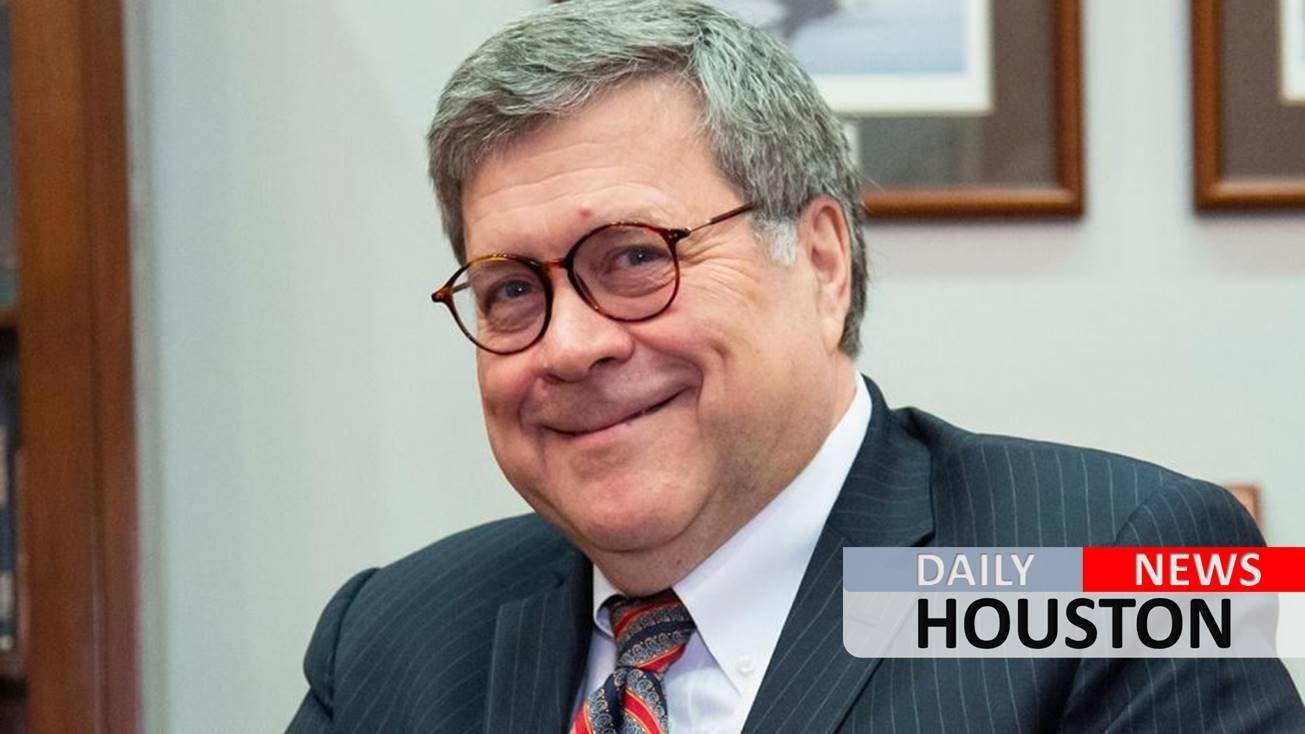
Senate Judiciary Committee Chairman Lindsey Graham kicked off Tuesday’s confirmation hearing for William Barr, President Trump’s attorney general nominee, by saying the Justice Department needs a new leader to “right the ship over there.”
“We’ve got a lot of problems at the Department of Justice,” Graham said. “Morale is low and we need to change that. I look forward to this hearing. You will be challenged. You should be challenged.”
Barr, 68, was nominated by the president to lead the Justice Department in December, after Attorney General Jeff Sessions resigned at Trump’s request in November.
Barr previously served as attorney general from 1991 to 1993, and his confirmation hearings nearly 30 years ago went off largely without incident.
“I want to thank the president for nominating somebody who is worthy of the job and who will understand on day one what the job is about – who can right the ship over there,” Graham said.
Barr is expected to face questions on Special Counsel Robert Mueller’s Russia investigation. Barr, as head of the Justice Department, would take over from acting attorney general Matthew Whitaker and oversee Mueller’s work.
Barr’s own comments about the Mueller investigation have attracted scrutiny, including an unsolicited memo he sent the Justice Department last year criticizing the special counsel’s inquiry into whether Trump had sought to obstruct justice. Barr has asserted that the memo was narrowly focused on a single theory of obstruction and didn’t touch the broader questions surrounding Russian election interference.
“The memo, there will be a lot of talk about it, as there should be,” Graham said.
Ranking member Dianne Feinstein, D-Calif., said during her opening statements that she also plans to ask Barr about his memo.
“Importantly, the attorney general must be willing to resist political pressure and be committed to protecting this investigation,” Feinstein said.
Barr was introduced Tuesday by former Utah Sen. Orrin Hatch, a former longtime member of the committee who retired and was replaced by Sen. Mitt Romney this year.
Barr, according to his statement released ahead of the hearing, will tell the committee that he believes Mueller should be permitted to conclude his investigation and that he thinks Congress and the public should be able to see the results of Mueller’s labor.
In his statement released ahead of the hearing, Barr also called Mueller a friend he’s known personally and professionally for 30 years. Barr’s oversight is especially significant since Deputy Attorney General Rod Rosenstein, who appointed Mueller and who has overseen his day-to-day work, is expected to step down soon.
It’s the first major Judiciary Committee hearing since the dramatic testimony last year during the confirmation of Supreme Court Justice Brett Kavanaugh.
Several Democratic senators thought to be potential presidential contenders in 2020 — including Kamala Harris, Cory Booker, and Amy Klobuchar — are among those set to question Barr.
Barr on Tuesday must also convince Republicans he’s sufficiently supportive of Trump’s tough-on-crime and hardline immigration agenda, although there are no serious concerns he will have difficulty garnering the simple majority of votes necessary to win confirmation. Republicans currently hold 53 of the Senate’s 100 seats.
Democrats will almost certainly grill Barr on the expansive view of presidential power he’s displayed at the Justice Department and in the years since.
As deputy attorney general, Barr advised then-President George H.W. Bush that he did not need congressional approval to attack Iraq. Earlier, when he led the Justice Department’s Office of Legal Counsel, he wrote opinions that allowed the U.S. government to invade Panama and arrest its dictator, Manuel Noriega, as well as to capture suspects without the consent of their host nations.
As attorney general in 1992, he endorsed Bush’s pardons of Reagan administration officials in the Iran-Contra scandal.
Barr has discussed those decisions in depth in the past but may be pressed on them again, especially in the context of the Mueller investigation.